
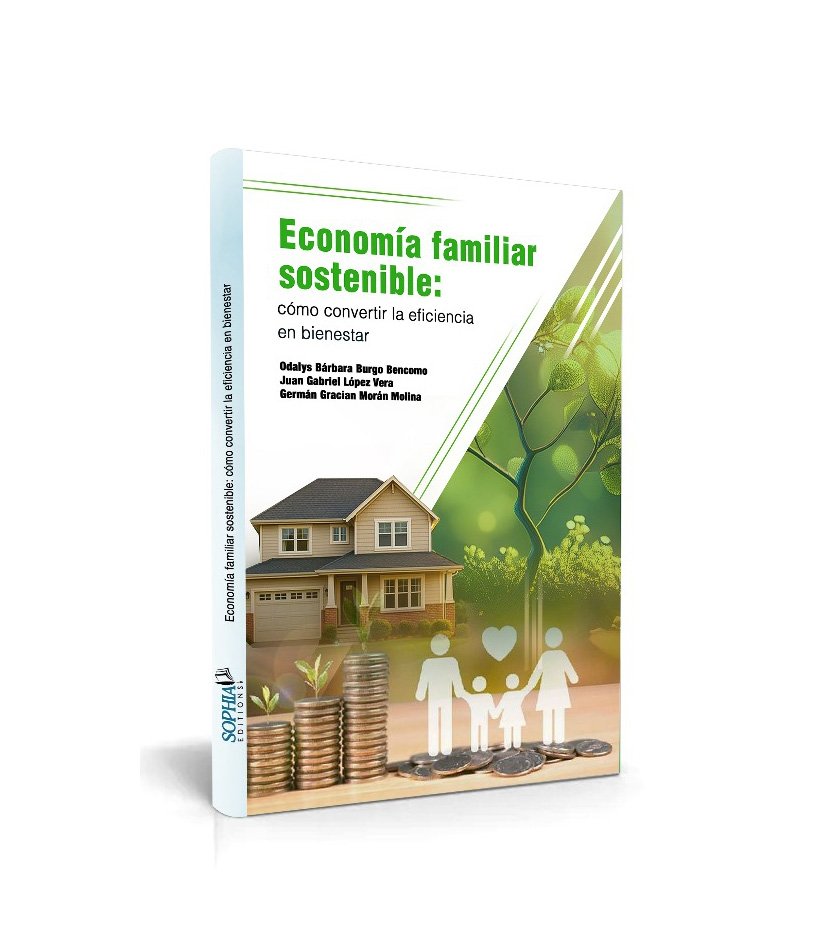
Sustainable Family Economy: How to Turn Efficiency into Wellbeing
Authors: Odalys Bárbara Burgo-Bencomo, Juan Gabriel López-Vera, Germán Gracian Morán-Molina
ISBN: 978-1-968794-19-4
DOI: https://doi.org/10.64092/QXNS7371
Year: 2025
Language: Spanish
BISAC Codes: BUS000000; BUS015000; SOC012000
Zenodo: https://zenodo.org/records/17785428
Share it
Description
The family economy constitutes the foundation of household wellbeing and, by extension, of society. Efficient management of household resources involves not only controlling income and expenses but also planning, making informed decisions, saving consciously, and investing responsibly. Financial stability allows families to meet basic needs, face unforeseen events, guarantee their children’s education, and generate growth opportunities, while fostering responsible consumption habits and promoting economic sustainability. This book presents the results of a Research and Outreach Project conducted by the authors at the Universidad Metropolitana del Ecuador (UMET), Machala campus. The study identified patterns of income, expenses, savings, credit, and investment among Ecuadorian families and contextualized the financial challenges of the local environment, such as income fluctuations, limited access to financial services, and the need to comply with current regulations. The main objective of the study was to contribute to the development of skills in personal income and expense planning and budgeting, promoting responsible use of financial products among adults aged 18 to 65 living in the urban area of Machala canton and in the parish of La Peaña in Pasaje canton. In this way, practical tools were provided to strengthen financial autonomy, encourage saving habits, and enable more informed and sustainable decision-making in managing family resources. To deepen the practical application of these findings, three families from the community received training focused on three main areas: family financial planning; concepts of simple interest, compound interest, interest rates, amortization, and the time value of money; and the use of financial products within households. The book offers strategies adapted to the local context, promoting financial planning, saving, responsible investing, and proper credit management, transforming economic efficiency into tangible wellbeing and fostering sustainable, autonomous, and resilient households.
Suggested citation (APA, seventh edition)
Burgo-Bencomo, O. B., López-Vera, J. G., & Morán-Molina, G. G. (2025). Sustainable Family Economy: How to Turn Efficiency into Wellbeing. Sophia Editions.